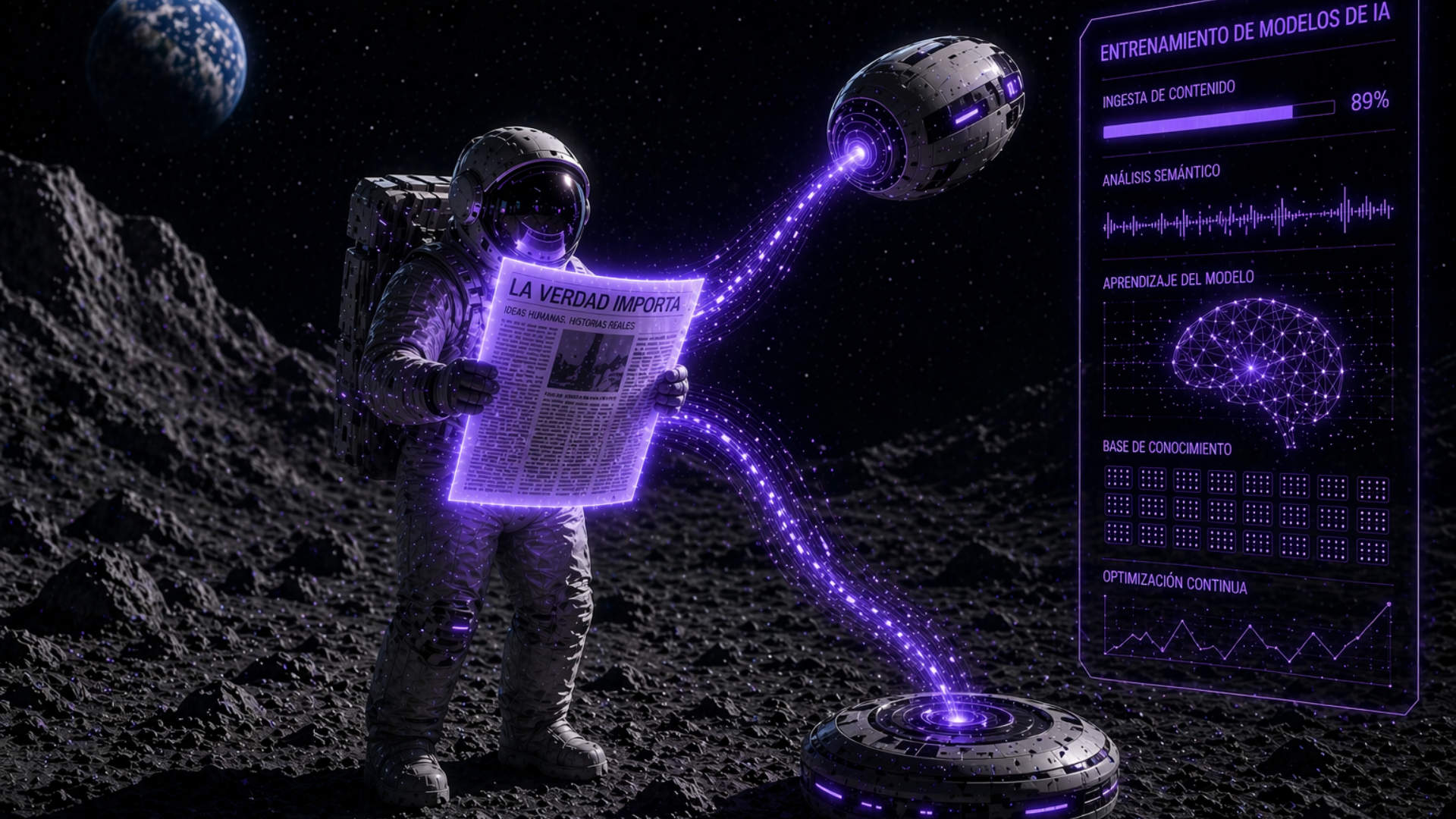

When we talk about technology, it’s easy to hide behind numbers and jargon. But today, this is about something far more fundamental: the value of human work.
The Spanish Media Association (AMI) recently shared a striking figure: AI bot traffic has grown by 300% in the past year. And behind that number isn’t just “web traffic”, it’s machines entering digital newsrooms and quietly extracting the result of journalists’ talent, research, and long hours.
The mystery of traffic from international
Many editors have noticed unusual spikes in traffic from the other side of the world. At first glance, it might seem like good news: “we’re being read worldwide.” But the reality is colder: these aren’t people, they’re processing nodes.
These massive visits from Asia aren’t readers interested in your stories—they’re digital “vacuum armies” sent by tech giants like ByteDance or Alibaba to scrape and download your content in milliseconds. They mimic human traffic to go unnoticed, but their goal is clear: capture your language, your exclusives, your voice—to train AI models on the other side of the world, without permission and without generating a single euro in revenue.
The real issue: the theft of human context
According to Akamai, the publishing sector is now one of the primary targets for these bots. Why? Because machines crave truth, context, and timeliness—qualities only humans can bring to content.
But the process is deeply unfair. So-called “fetchers” (real-time retrieval bots) summarize news into chatbots, meaning users never need to click through to the original source. Some reports point to a 96% drop in referral traffic. In other words, we’re feeding the very systems that are slowly making us invisible.
Solutions that make sense
At OA Cloud, we believe the answer isn’t fear—it’s technical sovereignty:
- Strengthen the relationship with your audience: The safest refuge from bots is community. Encouraging registration and building direct relationships with readers creates a space where machines don’t belong.
- Fair value exchange: If our content is the “fuel” that makes AI seem intelligent, then it’s time that intelligence is fairly compensated through licensing agreements.
Conclusion
We’re at a turning point. We can either be the generation of publishers that stood by while their work became fuel for someone else’s machines—or the ones who reclaimed digital sovereignty.
At OA Cloud, we believe technology should be our shield, not our threat. We must protect content—but above all, we must protect the people behind it. An algorithm may summarize a story, but it will never replace the judgment, integrity, and critical thinking of an editor.
That’s why this is a call to action for publishers. It’s time to move beyond competition and stand together to demand what’s fair: proper compensation from Big Tech. Countries like France have already shown it’s possible—cases like Le Monde prove that unity and determination can lead to real licensing agreements.
If high-quality content is the fuel that powers AI, then those who create it deserve to be paid. This isn’t just a debate—it’s a fight for the future of the profession.
Together, we are the wall AI shouldn’t be able to climb for free.
Source and key data: